The attic looks like free square footage until you stand under the rafters with a tape measure. An attic bedroom conversion has to satisfy structure, ceiling height, safe exit, stair access, insulation, ventilation, and local permit rules before paint colors matter. That is the part many homeowners miss. A sloped ceiling can feel charming in photos, then fail inspection because too much of the floor sits under low rooflines. Old joists can hold drywall and holiday bins, but not daily bedroom loads, furniture, and people.
For U.S. homeowners planning a serious remodel, this is where home improvement planning with real project standards becomes more useful than mood boards. You need to know whether the attic can become legal living space, not only whether it can look finished. The safest path starts with measurements, then structural review, then code layout. After that, design choices get easier because the room has earned the right to exist.
Attic Bedroom Conversion Code Rules Begin With Load, Headroom, and Legal Use
A finished attic bedroom is not a dressed-up storage zone. Once you call it sleeping space, the room enters a different world of expectations. The building department will care about floor strength, ceiling height, escape openings, stairs, smoke alarms, insulation, electrical work, and sometimes zoning bedroom counts. That may sound stiff, but it protects you from building a pretty room that becomes a resale problem later.
The attic must earn the word habitable
Most U.S. jurisdictions use some version of the International Residential Code, then add local amendments. The code term that matters is “habitable attic.” ICC NTA explains that a habitable attic needs at least 70 square feet of occupiable floor area, compliant ceiling height, and proper access and escape rules; it also notes that pull-down stairs do not satisfy required egress for that space.
That small word, “habitable,” changes the whole project. A storage attic can be reached by a ladder and have odd framing, low headroom, and exposed insulation. A sleeping room cannot. It needs a safe way in, a safe way out, and enough clear space for normal human use.
A non-obvious trap: finishing the attic without calling it a bedroom may not save you. If the layout looks, functions, and gets marketed like sleeping space, an inspector, appraiser, or buyer may treat it that way. A closet, finished walls, heat, outlets, and a door can tell the story even if the permit label tries to avoid it.
Headroom fails more projects than floor area
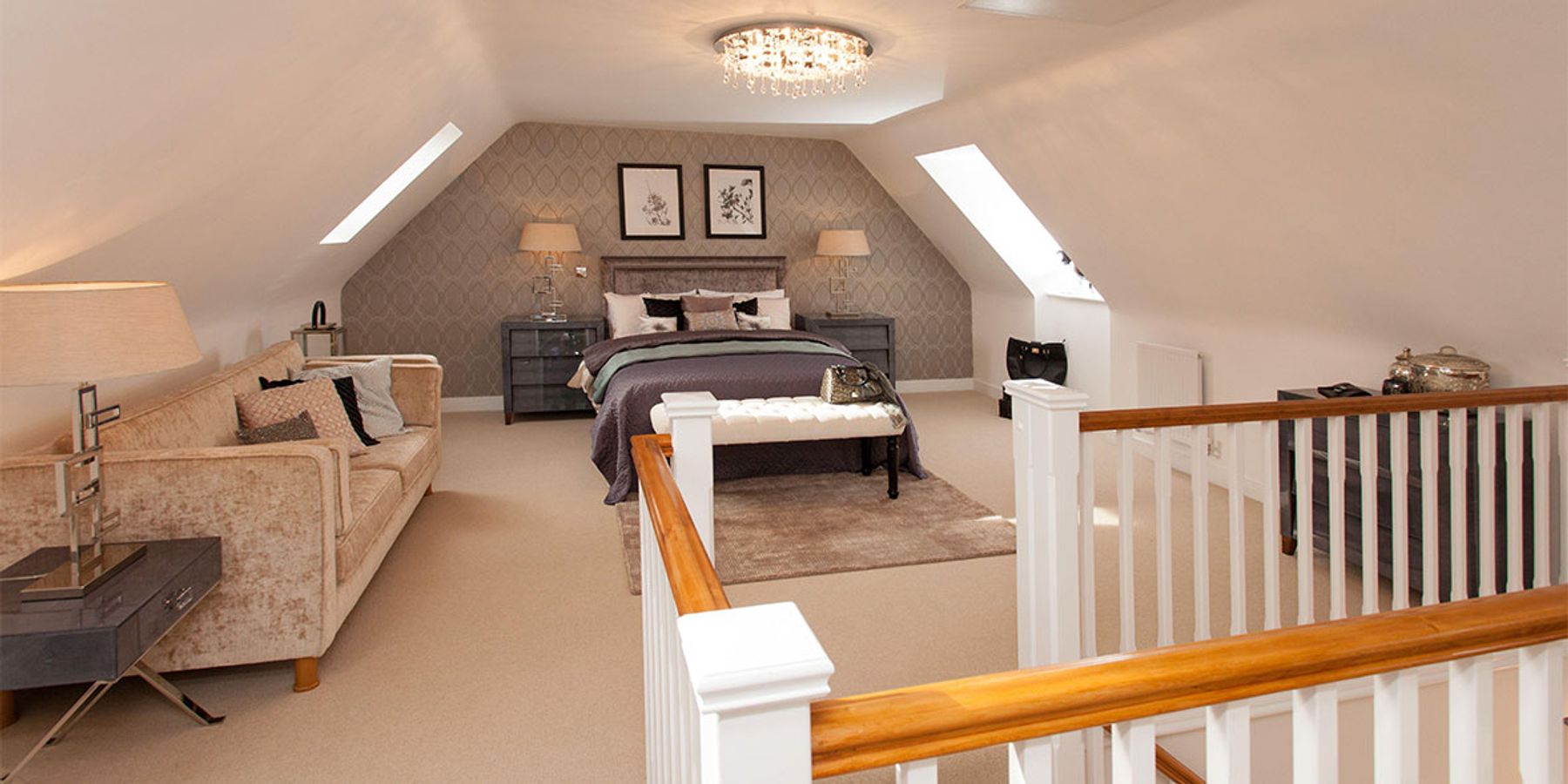
Sloped ceilings make attic rooms appealing, but they also steal legal square footage. Under common IRC language, habitable space generally needs a ceiling height of at least 7 feet. For rooms with sloped ceilings, at least half of the required floor area must reach 7 feet, and no part of that required area can be under 5 feet high.
That means you cannot count every inch under the roof slope. Knee-wall areas may work for drawers, shelves, or built-in storage, but they may not help the room qualify. In a Cape Cod house in Ohio, for example, a long attic may look spacious from the stair opening, yet only a narrow center strip may count once you mark the 5-foot and 7-foot lines.
Measure before you dream. Tape the floor where the ceiling reaches 5 feet. Then mark where it reaches 7 feet. The shape left between those lines tells you whether the room is possible, whether a dormer is needed, or whether the project should stay as storage.
The Structure Has to Carry People, Walls, and Daily Use
Once the room clears the first code screen, the next question is rougher: can the house carry it? Attic framing was often built to hold roof loads above and ceiling loads below. That does not mean it was built to hold beds, dressers, flooring, drywall, tile, people, and the bounce of daily life. Structure is where wishful thinking gets expensive.
Why attic floor joists need an engineer’s eye
Attic floor joists are often ceiling joists for the rooms below. Their job may have been to keep the ceiling flat, not to act like a bedroom floor. They may be too shallow, spaced too far apart, or interrupted by old ducts and wiring. Even when the wood looks solid, the span may be wrong for living loads.
A structural engineer looks at species, grade, joist size, spacing, span, bearing points, and existing notches or holes. That sounds like a lot because it is. One cut made years ago for a bathroom fan can matter when the same member now has to support a queen bed and a person walking across the room at midnight.
The surprise is that the fix is not always “add bigger joists everywhere.” Sometimes the smarter answer is sistering selected members, adding beams, adjusting bearing walls, or changing the bedroom layout so heavy items sit over stronger paths. Attic floor joists do not need guesswork. They need load paths.
Rafters, dormers, and roof changes can shift the whole load path
A dormer can rescue an attic room by adding headroom, light, and space for an egress window. It can also disturb the roof system. Cut the wrong rafter without proper support and the project stops being a bedroom plan. It becomes a structural repair.
Rafters, collar ties, ridge boards, ceiling ties, and roof sheathing work together. In older U.S. homes, you may also find framing that does not match modern assumptions. A 1920s bungalow in New Jersey may have real lumber sizes and odd bearing conditions. A 1980s tract home in Texas may have engineered trusses that should not be cut at all without a designed repair.
This is where many homeowners get fooled by online photos. The finished dormer looks simple from the outside. Behind the siding, though, it may need headers, posts, doubled rafters, proper flashing, and a load path down to bearing walls or foundation. The bedroom is only as safe as the structure nobody sees.
Safe Exit, Stairs, and Fire Protection Shape the Plan
A legal attic sleeping room needs more than a nice staircase and a window with a view. Fire changes the rules. Smoke rises, heat gathers under the roof, and a trapped upper room can become dangerous fast. That is why code treats emergency escape, stair access, smoke alarms, and fire separation as design requirements, not finishing details.
Egress window requirements are measured after the window opens
Egress window requirements are not based on how large the window looks from the street. They are based on the usable clear opening when the window is open. Common IRC language calls for at least one operable emergency escape and rescue opening in habitable attics and every sleeping room. The opening must lead directly to a public way, yard, or court that opens to one.
Typical rescue-opening dimensions include a minimum net clear opening of 5.7 square feet, minimum net clear height of 24 inches, minimum net clear width of 20 inches, and a sill height not more than 44 inches above the floor. A casement window may pass where a similar-looking double-hung window fails because the open sash leaves more clear space.
That detail matters in attics. A beautiful small dormer window may bring light, yet still fail as a rescue opening. The rough opening, glass size, and catalog size are not enough. You need the manufacturer’s net-clear-opening data, and you need it before framing the dormer.
A real staircase changes the house below it too
A fixed stair takes space from the floor below. That is the bargain. A pull-down ladder may feel practical for storage, but it does not work for a legal sleeping level under the guidance ICC NTA summarizes for habitable attics.
The stair has its own rules for width, riser height, tread depth, headroom, landings, guards, and handrails. Local enforcement can vary, especially in older homes where an existing stair already reaches the attic. Some building officials may allow limited exceptions for existing conditions. Others will require the stair to meet current standards once the use changes.
The non-obvious design move is to plan the stair before planning the bedroom. A code-friendly stair may land in the best part of the attic, steal headroom, or force the bed into a poor corner. Downstairs, it may eat part of a hallway, closet, or small office. A good plan accepts that early instead of trying to hide the stair after the room is drawn.
Mechanical Systems and Permits Decide Whether the Room Feels Legal
A room can pass the first look and still fail daily life. Attics get hot, cold, dry, noisy, and stuffy faster than lower floors. The roof is right there. Sun, wind, insulation gaps, and poor air sealing show up in comfort. Building code rules set the floor, but a livable bedroom needs systems that behave through a full American summer and winter.
Heat, cooling, insulation, and roof ventilation must work together
Adding supply air without fixing insulation is a weak plan. So is packing insulation against the roof deck without thinking about ventilation, condensation, and local energy rules. A finished attic changes the thermal boundary of the house. That means the old vented attic may become a knee-wall room, a vaulted ceiling, or a mixed assembly with tight cavities.
In a hot Atlanta attic, cooling load may punish an undersized HVAC system. In a Minnesota attic, poor air sealing can push warm indoor air into cold roof cavities and create moisture trouble. In the Southwest, radiant heat through the roof can make the room feel harsh even when the thermostat says the house is fine.
The quiet lesson: comfort starts before the drywall. Air sealing, insulation depth, baffles, roof ventilation, HVAC capacity, return-air paths, and electrical placement should be drawn together. If each trade solves only its own piece, the finished room may pass inspection and still feel wrong.
Permit drawings protect resale value as much as inspection day
Permits are not only about avoiding a stop-work notice. They create a paper trail that the bedroom was reviewed, inspected, and added properly. That matters when you sell, refinance, insure, or answer a buyer’s question about finished square footage.
A typical permit set may show existing framing, proposed floor reinforcement, stair layout, room dimensions, ceiling-height lines, egress window details, smoke and carbon monoxide alarms, insulation values, electrical plans, and HVAC notes. The building department may ask for engineer-stamped drawings when structural changes affect joists, rafters, beams, or dormers.
Here is the practical sequence:
- Measure headroom and usable floor area.
- Ask the building department which code edition and local amendments apply.
- Have a structural pro review the framing.
- Draw the stair and egress plan before finishes.
- Submit permits before starting structural or system work.
- Keep inspection records with your home files.
That last step feels boring until a buyer asks for proof. Then it feels smart.
Conclusion
A finished attic bedroom can add useful space without changing the home’s footprint, but only when the plan respects the house first. The best projects start with structure, headroom, stairs, escape, and mechanical comfort. The paint comes later.
Treat an attic bedroom conversion as a legal and structural change, not a weekend finish job. That mindset keeps you from spending money on drywall that has to come back down, windows that do not pass, or floors that were never sized for bedroom use. It also helps you talk with contractors from a stronger place because you know which questions matter.
Start with measurements, call your local building department, and bring in an engineer before you commit to the layout. For more planning help, pair this project with a home remodeling permit checklist and small bedroom layout ideas before final design. Build the room so it can be lived in, inspected, insured, and sold with confidence.
Frequently Asked Questions
How do I know if my attic can legally become a bedroom?
Start with ceiling height, usable floor area, fixed stair access, emergency escape, and structural framing. If those items fail, finishes will not fix the problem. Your local building department can confirm which code edition and amendments apply to your home.
Do attic floor joists always need reinforcement?
Many do, but not all. Older attic joists were often sized for ceiling support, not bedroom loads. An engineer can check span, spacing, wood condition, bearing points, and past cuts before recommending sistering, beams, or another repair.
What ceiling height is needed for a finished attic room?
Common IRC-based rules expect habitable space to reach 7 feet, with special treatment for sloped ceilings. In many cases, at least half of the required floor area must reach 7 feet, and counted areas cannot drop below 5 feet.
Can a skylight count as an emergency escape opening?
Usually, only if it meets the required net clear opening, sill or access height, operation rules, and direct exit requirements accepted by the local building official. Many skylights bring light but do not work as safe rescue openings.
Is a pull-down ladder allowed for a finished attic bedroom?
A pull-down ladder is usually not acceptable for sleeping space. A legal habitable attic normally needs fixed vertical access, such as a compliant stair, ramp, exterior stair, or approved exterior door path.
Do I need a permit to finish an attic into living space?
Most U.S. jurisdictions require permits when you add living space, change structure, add electrical circuits, modify HVAC, install stairs, or create a bedroom. Permit rules vary locally, so check before demolition or framing begins.
Will finishing an attic increase home value?
It can, but only when the space is legal, safe, comfortable, and properly documented. Unpermitted attic bedrooms can scare buyers, appraisers, and insurers. Good records often matter as much as the finished photos.
What is the biggest mistake homeowners make with attic bedrooms?
They design around furniture before checking code and structure. The right order is headroom, floor strength, stairs, egress, insulation, HVAC, electrical work, then finishes. That order saves money and prevents painful redesigns.