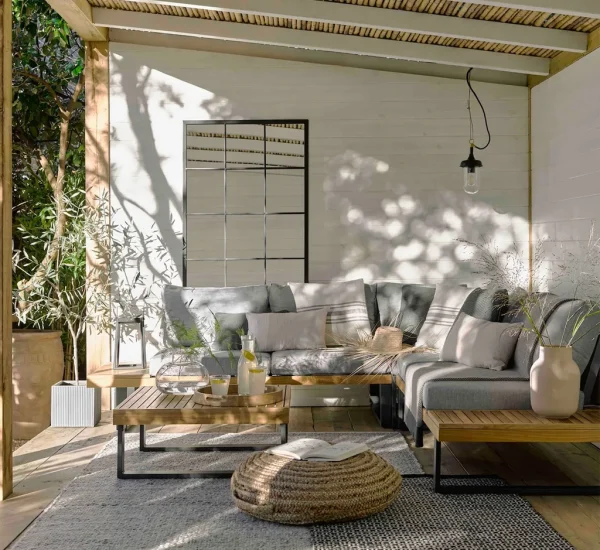
A patio can look expensive and still feel strangely empty. The problem is rarely the budget; it is usually the missing point that tells the eye where to land, where to pause, and where the space begins to feel intentional. That is where Courtyard Focus Decor earns its place, because a strong focal idea turns scattered outdoor pieces into a setting you want to use. A bench, planter, lantern, wall, tree, or water bowl can carry the whole mood when it is chosen with purpose instead of dropped into place. For homeowners, renters, and anyone shaping a compact outdoor area, the best choices come from restraint, not from filling every corner. Even a small patio can feel layered when the layout supports comfort, shade, movement, and beauty at the same time. If you care about presentation beyond the home itself, thoughtful outdoor brand visibility also shows how much first impressions matter in any designed space. Your courtyard does not need more objects. It needs a clear reason for every object that stays.
Courtyard Focus Decor Starts With One Strong Visual Anchor
A courtyard starts to make sense when one feature takes command without bullying the rest of the space. Too many patios fail because every item asks for attention at once: patterned cushions, shiny pots, string lights, wall art, side tables, and three different plant styles all competing like voices in a small room. A strong visual anchor quiets that noise. It gives patio styling a center, and once that center exists, every other choice becomes easier to judge.
Use Patio Styling Around a Main Feature
A main feature does not have to be grand. A tall olive tree in a clay pot, a sculptural chair, a narrow fountain, or a painted courtyard wall can do the job if it has enough presence. The mistake is choosing something too timid and then asking accessories to rescue it. Accessories are poor leaders. They work best when they support a feature that already knows its role.
Good patio styling begins with one question: what should someone notice first when they step outside? In a townhouse courtyard, that might be a built-in bench framed by two planters. In a rented apartment patio, it might be a folding bistro table under a warm lantern. The object matters less than the clarity. A small courtyard becomes calmer when the first glance has somewhere to settle.
Scale matters more than price here. A tiny ceramic pot on a wide blank wall will look lonely, no matter how tasteful it is. A large matte planter with a strong plant shape can feel richer than a collection of expensive pieces because it understands proportion. That is the quiet trick behind good outdoor design: confidence often looks like size, space, and restraint working together.
Let Outdoor Decor Ideas Serve the Anchor
Outdoor decor ideas become useful only after the anchor is chosen. Before that, they are distractions dressed as inspiration. A woven rug, brass lantern, cushion set, and hanging planter may all be lovely, but they cannot all be the star. The courtyard needs a lead actor, not a crowded stage.
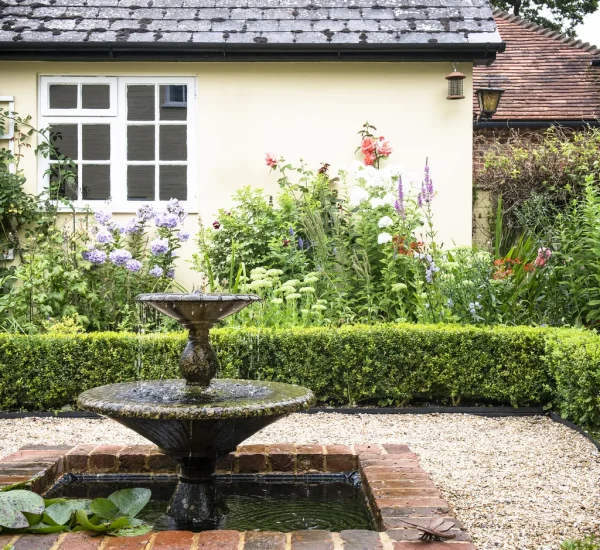
Once the anchor is clear, smaller pieces can echo its mood. A water bowl pairs well with soft grasses, smooth stones, and low seating because all of them support a restful rhythm. A bold wall color can handle plainer furniture because the wall already carries the drama. This is where restraint becomes more than taste; it becomes a design tool.
A real-world example makes the point cleanly. Take a narrow patio with a plain fence and concrete floor. Instead of buying several small decorations, place one long bench against the fence, add two oversized planters at the ends, and hang one warm fixture above the seat. The space now has a destination. Everything else can stay simple because the courtyard already has a reason to exist.
Shape Comfort Before You Add Beauty
The next layer is comfort, because a courtyard that photographs well but feels awkward will not be used for long. Beauty may draw you outside once, but comfort is what brings you back with coffee, a book, or dinner after a tired day. This is where many patio projects go wrong. People decorate the edges and forget the body in the middle: where knees go, where shade falls, how chairs turn, how people move.
Choose Small Courtyard Design That Fits Real Movement
Small courtyard design works when it respects the way people actually use tight spaces. A chair needs room to pull back. A table needs enough clearance for plates and elbows. A planter near a doorway needs to stay out of the swing path, even if it looks perfect in a photo. The courtyard has to function before it can charm anyone.
A common mistake is pushing every item against the wall. That move seems logical because it opens the center, but it can make the space feel like a waiting area. Pulling one chair slightly inward or angling a loveseat can create a more natural social pocket. The center does not always need to be empty; it needs to be useful.
Small courtyard design also benefits from furniture that has a clear job. A storage bench beats two decorative stools when cushions, garden gloves, or throws need somewhere to go. A round table softens tight corners better than a square one in many compact patios. The best pieces solve two problems without looking like they are trying too hard.
Build Patio Styling Around Shade and Seating
Shade decides how long you stay outside. It is easy to underestimate this until the sun hits a stone floor at noon and the whole patio starts acting like a skillet. A beautiful chair in the wrong heat zone becomes decoration, not seating. The body votes faster than the eye.
Patio styling should follow the shade pattern instead of fighting it. Watch the courtyard at morning, afternoon, and early evening before choosing the final seating spot. A slim umbrella, pergola screen, vine-covered trellis, or sail shade can change the entire mood while giving the space a reason to be used during more hours of the day.
Here is the counterintuitive part: the most comfortable courtyard is not always the most open one. A partial screen, tall plant, or side wall can make a seating area feel protected instead of boxed in. People relax when their backs feel held. Good outdoor seating borrows that instinct and turns it into layout.
Layer Texture, Light, and Planting With Discipline
After the anchor and comfort plan are in place, the courtyard can take on depth. This is where texture, light, and plants do the heavy lifting. The goal is not to create a showroom. The goal is to create enough sensory interest that the patio feels alive at different times of day. Morning needs freshness. Afternoon needs shade and structure. Evening needs glow.
Use Outdoor Decor Ideas That Age Well
Outdoor decor ideas should survive more than one season of taste. Trend-heavy pieces often look exciting at first, then start to feel loud once the novelty fades. Natural materials, honest finishes, and simple silhouettes age better because they do not beg for constant replacement. Stone, clay, wood, linen-look cushions, woven baskets, and matte metal usually carry a courtyard with less fuss.
Weather also tells the truth. A cheap glossy planter may look fine indoors, but sunlight and rain can turn it tired fast. A slightly imperfect terracotta pot, on the other hand, gains character as it weathers. That slow aging suits a courtyard because outdoor spaces should not look frozen. They should look lived with, cared for, and allowed to breathe.
Texture should never become clutter. One rough surface, one smooth surface, and one soft layer can be enough in a small area. For example, a limewashed wall, a timber bench, and linen-toned cushions can give the space depth without shouting. The eye enjoys contrast, but it gets tired when every surface performs.
Make Garden Patio Tips Practical at Night
Garden patio tips often focus on plants, but lighting decides whether those plants remain part of the space after sunset. A courtyard without night lighting loses half its life. It becomes a dark border around a lit room instead of an outdoor room of its own.
Layered light works better than one bright fixture. Low lanterns near planters, a soft wall light, and a small table lamp rated for outdoor use can create a warm shape around the seating area. Bright overhead light can flatten everything and make even a well-designed patio feel harsh. Gentle light gives edges, shadows, and faces a kinder look.
Planting also changes under light. Tall grasses cast movement on a wall. Glossy leaves catch small highlights. A single tree becomes architectural when lit from below with care. These details sound minor until you sit outside at night and feel the difference. The courtyard stops being an add-on and starts becoming the room everyone drifts toward.
Keep the Patio Personal Without Making It Busy
The final layer is personality, and this is the part people either avoid or overdo. A courtyard with no personal detail can feel staged, while a courtyard with too many personal objects can feel restless. The balance sits in the middle: a few choices that say something about how you live, not a full inventory of what you like.
Apply Garden Patio Tips With Seasonal Restraint
Garden patio tips become more useful when you treat the courtyard as a changing space rather than a finished project. Plants grow, cushions fade, lanterns move, and your habits shift with the weather. A patio should have a stable base and a few flexible details that can change without forcing a full redesign.
Seasonal restraint means editing before adding. In spring, a fresh herb pot and lighter cushions may be enough. In cooler months, a heavier throw, deeper plant tones, and one extra lantern can shift the mood. You do not need to redecorate the whole courtyard every season. You need small changes that respect the original structure.
A grounded example: keep the main bench, planters, and wall color consistent all year, then rotate only the table styling and soft textiles. This keeps the patio recognizable while letting it feel current. The space gains rhythm instead of looking like a store display that changes costume every few months.
Make Small Courtyard Design Feel Personal, Not Packed
Small courtyard design needs personality in concentrated doses. One handmade bowl, one framed outdoor-safe mirror, one inherited chair, or one unusual plant can say more than a dozen themed items. Personal does not mean packed. It means chosen.
Color is often the easiest way to add identity without crowding the floor. A muted blue door, a deep green bench, or rust-toned cushions can give the courtyard a signature mood. The trick is to repeat the color lightly, not everywhere. One echo in a planter or textile is enough to make the choice feel intentional.
This is where Courtyard Focus Decor becomes less about decorating and more about editing your own taste. You may love coastal stripes, carved lanterns, mosaic tables, climbing roses, and black metal chairs, but the patio may not love them all together. A good courtyard asks you to choose. That discipline is not limiting; it is what lets the strongest pieces speak.
Conclusion
A courtyard becomes memorable when it stops acting like leftover outdoor space and starts behaving like a room with a point of view. The best patios do not win through volume. They win through decisions that feel calm, useful, and personal at the same time. Choose the anchor first, then shape the seating, shade, texture, light, and seasonal details around it. That order protects you from the most common decorating mistake: buying attractive pieces that never learn to belong together. Courtyard Focus Decor works because it gives the eye a destination and gives daily life a better place to land. Start with one strong feature, remove anything that competes with it, and build the rest with patience. Your next step is simple: stand in your patio, decide what should matter most, and let everything else either support that choice or leave.
Frequently Asked Questions
What are the best courtyard decor tips for small patios?
Start with one main feature, such as a bench, planter, wall color, or fountain. Keep furniture scaled to movement, not empty floor space. Add texture through cushions, pots, and lighting instead of crowding the patio with too many separate decorations.
How can patio styling make a courtyard feel bigger?
Use fewer, larger pieces instead of many small ones. A clear seating zone, raised planters, and wall-mounted lighting pull attention upward and outward. Keeping the floor less crowded also helps the space feel open without stripping away comfort.
What small courtyard design works best for renters?
Freestanding pieces work best because they move without damage. Try large pots, folding furniture, outdoor rugs, battery lanterns, and removable privacy screens. These choices can change the mood of the courtyard while keeping walls, floors, and fences untouched.
Which outdoor decor ideas add the most value to a patio?
Comfortable seating, strong lighting, shade, and healthy planting add the most value because they change how often the patio gets used. Decorative objects matter, but they should support those basics rather than replace them.
How do garden patio tips help with low-maintenance spaces?
Choose hardy plants, weather-friendly materials, and furniture that cleans easily. Group pots by water needs, limit fussy accessories, and use mulch or gravel to reduce mess. A low-maintenance patio still needs care, but it should never feel like a second job.
What is the easiest way to create a courtyard focal point?
Pick the first thing you want people to notice, then make it stronger. That could mean enlarging a planter, painting a wall, centering a bench, or adding a sculptural light. Remove nearby distractions so the focal point has room to breathe.
How should lighting be used in courtyard patios?
Use soft layers instead of one harsh overhead light. Combine wall lights, lanterns, and low plant lighting to shape the space after dark. Warm lighting near seating makes the courtyard feel inviting and keeps plants visible in the evening.
Can a courtyard patio look stylish on a small budget?
A stylish courtyard depends more on editing than spending. Choose one strong feature, repeat materials thoughtfully, and avoid buying random pieces because they are discounted. A few well-placed items almost always look better than a patio filled with bargains.