A courtyard can turn plain outdoor space into the most memorable part of a home. The problem is that many courtyards sit halfway finished: a few chairs, a lonely planter, maybe a light fixture that feels more like an afterthought than a design choice. Smart Courtyard Focus Updates change that by giving the space a clear center, a stronger mood, and a reason for people to slow down when they step outside. You are not decorating a leftover gap between walls; you are shaping a small outdoor room with its own rhythm. That shift matters because outdoor beauty is no longer about filling every corner with plants or furniture. It is about choosing what deserves attention and letting the rest support it. Even a compact courtyard can feel graceful when the eye knows where to land. For homeowners, designers, and creators sharing home inspiration through digital lifestyle features, the strongest courtyard ideas often come from restraint, not excess. A courtyard earns its charm when every update feels intentional.
Shape the First Impression Before Adding More Decor
A courtyard makes its first impression before anyone sits down, touches a plant, or notices the furniture. The eye reads proportion, light, movement, and empty space faster than it reads style. That is why courtyard updates should start with structure, not shopping. A new bench or planter may help, but only after the space has a clear visual path and a strong place for attention to settle.
Courtyard updates that create a clear arrival point
A strong arrival point tells guests where the courtyard begins emotionally, not only physically. That may be a framed view through a doorway, a stone path that narrows toward a planted wall, or a single large pot placed where the eye naturally stops. The point is not to impress with size. The point is to give the space a first sentence.
Many people make the mistake of spreading interest across every side of the courtyard. They hang art on one wall, add planters to another, place seating on a third, then wonder why the space still feels unsettled. The eye has too many assignments. Better design gives the eye one job first, then rewards it with smaller details afterward.
A real-world example is a narrow townhouse courtyard with a plain rear wall. Instead of placing small pots along both sides, you could center one sculptural tree in a broad container against that rear wall. Add two low plants at its base and keep the side walls quieter. That single move gives the courtyard a destination, which makes the whole layout feel calmer.
Outdoor beauty begins with negative space
Empty space carries more weight than most people give it. A courtyard packed with objects can feel smaller than it is, while a courtyard with breathing room often feels polished even with fewer pieces. Negative space is not wasted space. It is the pause that lets the main feature speak.
This matters most in compact courtyards, where every object competes for attention. A round table, four chairs, a water bowl, three lanterns, hanging baskets, and wall decor may sound charming in a product list. In real life, that combination can turn a restful outdoor room into a storage display with cushions.
Outdoor beauty often grows from removal. Take away the chair no one uses. Reduce the planter count. Leave a clean stretch of paving visible. The unexpected insight is simple: a courtyard can look richer after you subtract from it, because the best details finally have room to register.
Build a Centerpiece That Earns Attention
Once the structure feels settled, the courtyard needs one feature with enough presence to hold the space together. This is where Courtyard Focus Updates become more than a tidy redesign. A focal point should not shout from the middle of the courtyard like a stage prop. It should feel inevitable, as though the space had been waiting for that one feature all along.
Garden focal points with natural weight
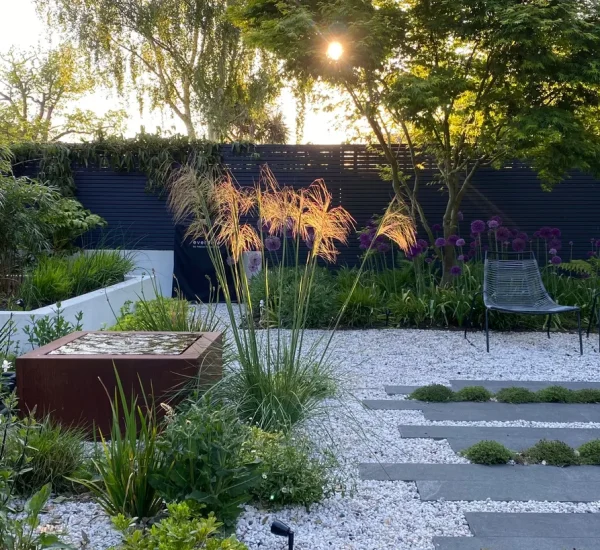
Garden focal points work best when they feel rooted in the courtyard rather than dropped into it. A small tree, a raised planter, a textured wall, or a water feature can all work, but the chosen piece must match the scale of the space. Too small, and it disappears. Too large, and it bullies the courtyard.
A Japanese maple in a ceramic pot, for example, can bring shape, seasonal color, and shadow without needing much support. In a Mediterranean-style courtyard, one olive tree in a weathered planter can do the same job with a drier, sun-washed character. The feature carries the mood, while the rest of the space keeps its dignity by staying quieter.
Garden focal points should also change through the day. Leaves shift in wind. Water catches light. A textured wall grows deeper as shadows move across it. Static decor can work, but living or light-responsive features tend to hold attention longer because they never look exactly the same twice.
Stylish patios need one brave decision
Stylish patios are rarely built from safe choices stacked together. They usually have one brave move: a deep wall color, a bold tile pattern, a built-in bench, an oversized planter, or a dramatic pendant light under a covered section. The mistake is making five brave moves at once. Confidence does not mean noise.
A courtyard with pale stone flooring might need a dark charcoal wall behind the seating to create depth. Another space might need handmade terracotta tiles underfoot and almost nothing decorative above waist height. The brave decision depends on what the courtyard lacks. Flat spaces need contrast. Busy spaces need discipline. Shadowed spaces need warmth.
The trick is to make the bold element feel useful, not theatrical. A tiled wall can protect a splash zone behind a fountain. A built-in bench can save floor space. A large planter can screen a neighbor’s window. When beauty solves a problem, the design feels grown-up.
Make Comfort Feel Designed, Not Added Later
A courtyard can look beautiful in photos and still fail in daily life. That failure usually comes from comfort being treated as a finishing touch. Seating gets squeezed in after the plants. Shade appears only when the sun becomes unbearable. Lighting gets added after the first evening outside feels flat. Strong courtyard design does not separate appearance from use; it makes comfort part of the visual plan.
Stylish patios balance seating and movement
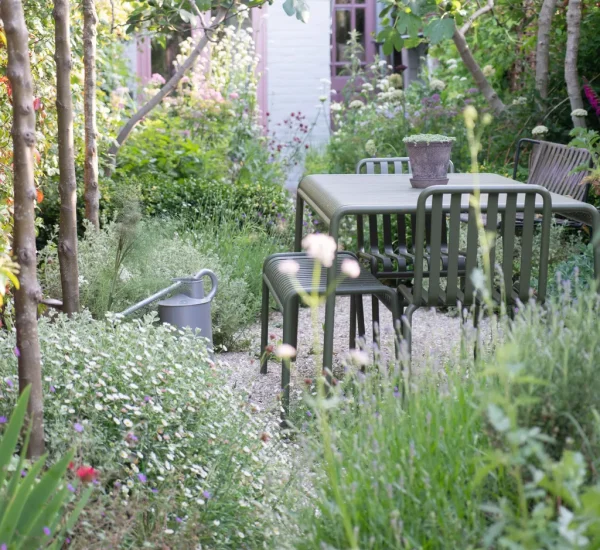
Good seating should invite people in without blocking the natural flow through the courtyard. A pair of chairs angled toward a planter may feel better than a full dining set forced into a tight footprint. A bench along one wall may open the center, while movable stools can appear only when needed. The best layout respects how bodies move.
Stylish patios also understand that comfort is not only about softness. A chair with thick cushions may still feel wrong if it faces glare, sits too far from a table, or leaves someone’s back exposed to a doorway. People relax when the layout feels protected. Corners, low walls, and planting edges can all help create that protected feeling.
One practical test works better than any design rule: walk through the courtyard while carrying a tray. If you have to twist, step around furniture, or squeeze past a planter, the layout is fighting you. A beautiful courtyard that makes daily use awkward will slowly become a place you admire from indoors.
Courtyard updates for shade, sound, and evening use
Courtyard updates should account for the hours when the space will be used most. A sunny courtyard may look bright at noon yet become unusable in summer without shade. A shaded courtyard may feel cool and calm during the day but gloomy after sunset without layered light. Design has to follow real habits, not fantasy weather.
Shade can come from a pergola, sail cloth, climbing vine, umbrella, or carefully placed tree. The right choice depends on whether you need full coverage, filtered light, or seasonal change. A vine-covered frame may soften hard walls beautifully, but it also needs pruning and patience. An umbrella works faster, though it may not carry the same architectural grace.
Sound deserves attention too. A small fountain can soften traffic noise, while gravel underfoot adds a quiet sensory layer. Even the sound of leaves moving against a wall can make the courtyard feel alive. The surprise is that comfort often comes from things you barely notice directly.
Finish With Materials That Age Well
The final layer is where many courtyards lose their quality. Cheap finishes may look acceptable for a few weeks, then fade, crack, wobble, or stain. Outdoor spaces are honest. Sun, rain, dust, and temperature shifts expose weak choices fast. A courtyard does not need luxury materials, but it does need materials that can age without looking defeated.
Outdoor beauty depends on texture more than shine
Glossy finishes often look tempting in a showroom, yet courtyards usually benefit from texture, grain, and softness. Stone, limewash, clay, timber, gravel, matte metal, and woven fibers tend to age with more grace than shiny plastics or thin coated surfaces. Texture gives sunlight something to work with.
Outdoor beauty also depends on how materials sit beside each other. Smooth plaster beside rough stone can feel balanced. Timber against planting adds warmth. A matte black frame can sharpen a pale wall. The goal is not to match everything. Matching can flatten a courtyard until it feels like a catalog set.
A useful example is a small courtyard with concrete pavers. Instead of replacing the entire floor, you might add gravel borders, timber seating, and a limewashed wall. The concrete becomes part of a richer material story instead of the thing you keep apologizing for. Smart design often works with the stubborn parts of a space rather than pretending they are not there.
Garden focal points need lighting with restraint
Lighting should protect the mood, not attack it. One harsh floodlight can ruin a courtyard faster than a cheap chair. Soft wall washers, low path lights, lanterns, and small uplights near plants can create depth without making the space feel staged. Restraint matters after dark.
Garden focal points usually need only a gentle cue. A slim uplight under a tree, a warm glow behind a screen, or a small light grazing a textured wall can be enough. When every feature gets lit equally, nothing feels special. Evening design works because some areas glow while others fall back.
Durability matters here as much as mood. Outdoor fixtures need proper ratings, protected wiring, and placement that avoids glare at eye level. Poor lighting does not merely look bad; it can make the courtyard uncomfortable. The best result feels quiet, safe, and inviting without making you aware of the fixtures doing the work.
Conclusion
A courtyard becomes beautiful when you stop treating it like spare outdoor space and start treating it like a room with sky above it. The strongest choices are not always the largest ones. A better focal point, a calmer layout, a smarter lighting plan, or a material that ages with character can shift the whole mood. Courtyard Focus Updates work because they give attention a path: first arrival, then comfort, then texture, then atmosphere. That path keeps the space from becoming a pile of unrelated nice things. It also gives you a better way to make decisions when temptation shows up in the form of another planter, another chair, or another decorative object. Start with the one part of your courtyard that feels most unresolved, then make one confident improvement before adding anything else. A courtyard with a clear focus will always feel more beautiful than one trying to impress from every corner.
Frequently Asked Questions
What are the best courtyard updates for a small outdoor space?
Start with one focal point, one comfortable seating zone, and a clear walking path. Small courtyards need discipline more than decoration. Choose fewer, stronger pieces so the space feels open, calm, and intentional rather than crowded.
How can outdoor beauty be improved without a full renovation?
Change the visual center first. A large planter, painted wall, better lighting, or textured screen can shift the whole courtyard without major construction. Keep the update focused so the improvement feels designed, not patched together.
What garden focal points work well in compact courtyards?
Small trees, wall fountains, sculptural pots, textured feature walls, and raised planting beds work well. The best choice has enough presence to anchor the space without blocking movement or making the courtyard feel cramped.
How do stylish patios stay comfortable in hot weather?
Shade must be planned early. Pergolas, umbrellas, climbing plants, and shade sails can all work when matched to the courtyard’s sun pattern. Add breathable seating materials and avoid dark surfaces where people sit or walk barefoot.
What lighting is best for courtyard focus areas?
Soft, layered lighting works best. Use low lights near paths, gentle uplights near plants, and warm wall lighting around seating. Avoid harsh floodlights because they flatten texture and make the courtyard feel exposed.
How many plants should a courtyard have?
A courtyard needs enough planting to feel alive, not so much that it loses structure. One main plant, a few supporting layers, and seasonal accents often look better than many small pots scattered across every edge.
Can courtyard updates increase home appeal?
Yes, a well-designed courtyard can make a home feel more finished, private, and memorable. Buyers and guests notice outdoor rooms that feel usable, cared for, and emotionally inviting rather than empty or cluttered.
What is the easiest way to make a courtyard feel more expensive?
Reduce visual clutter, improve lighting, and choose materials with texture. Expensive-looking courtyards usually rely on restraint, proportion, and strong focal points instead of piles of decorative items.