The best shower bench is the one you stop noticing because it fits your body, your routine, and the room without asking for attention. A good shower bench installation solves three problems at once: where you sit, where water goes, and how safely you move when the floor is wet. For many U.S. homeowners, that means planning for aging parents, sore knees, post-surgery recovery, young kids, or a guest who needs a calmer bathroom. It can also mean making a plain builder-grade shower feel warmer and easier to use. Smart bathroom planning is part design sense, part common sense, and part honest thinking about daily life; that is why broad home improvement planning resources can help you frame the project before tile, glass, and fixtures take over the conversation. The point is not to turn every bathroom into a hospital room. It is to add a seat that feels natural now and still earns its place years from now.
Start With the Body, Not the Bench
A bench looks like a simple add-on, so people often begin with the shape. Corner, floating, full-width, teak, stone, fold-down. That order is backward. Start with the person who will use it on a tired Monday morning, when the room is foggy and the floor is slick. The right answer depends on reach, balance, hip comfort, and how the user enters the shower. A seat that photographs well can still fail in daily use if it sits too far from the controls or crowds the entry path.
Plan the sitting position before choosing tile
Stand in the shower space before demolition begins. Face the valve wall. Pretend you are washing your hair, shaving, or helping someone rinse shampoo from their shoulders. Your hand will show you where the bench belongs faster than a catalog can. If the seat lands on the wrong wall, the user may need to twist, lean, or stand up to reach the handheld sprayer.
A common U.S. remodel mistake happens in narrow hall bathrooms, especially in older ranch homes from the 1960s and 1970s. The owner wants a spa look, so the bench runs across the back wall. It looks neat through the glass. Then the user sits down and finds the controls on the opposite side, past the spray zone. The fix is not fancier tile. It is better placement.
This is where accessible bathroom design gets more personal than code. A right-handed user with one weak knee may prefer a seat on one side. A wheelchair user may need transfer space on another. A parent bathing a child may care more about kneeling room and a place to rest supplies. One room can serve all three needs, but only if you map movement first.
Before the final layout, tape the outline of the seat on the shower floor and wall. Use painter’s tape, then step in with a towel under your feet so you feel how the space changes. This small mockup can reveal a door swing problem, a cramped elbow, or a control valve that sits on the wrong side of the body. It prevents expensive regret.
Keep wet movement short and predictable
A bench should reduce motion, not add a new obstacle course. The seat, grab bar, controls, niche, and handheld shower should work as a small cluster. When those pieces scatter across the enclosure, every shower asks the user to make small risky moves. One reach for soap. Another turn for the sprayer. Another lean to adjust water temperature.
Short movement matters most in winter. In states like Michigan, Pennsylvania, and Minnesota, cold tile and dry indoor air can make people rush. Rushing is when slips happen. A bench gives you a pause point, but it works best when you can sit, wash, rinse, and stand with the same steady rhythm.
Here is the counterintuitive part: a bench near the entrance can feel safer than one tucked deep inside a large shower. Many homeowners assume deeper means calmer. In practice, the first step into a wet area is often the most uncertain step. A well-placed seat near that transition lets the user enter, sit, close the door or curtain, and settle before water hits the floor.
Choose a Seat Type That Matches the Room
Once the movement pattern makes sense, the type of bench becomes easier to choose. The decision is not only style. It also affects framing, waterproofing, cleaning, resale, and how the shower feels to different bodies. A built-in shower seat can look permanent and custom. A folding shower bench can keep floor space open. A freestanding teak bench can work when you are not ready to remodel, though it cannot replace a properly anchored safety seat.
Built-in shower seat ideas for permanent comfort
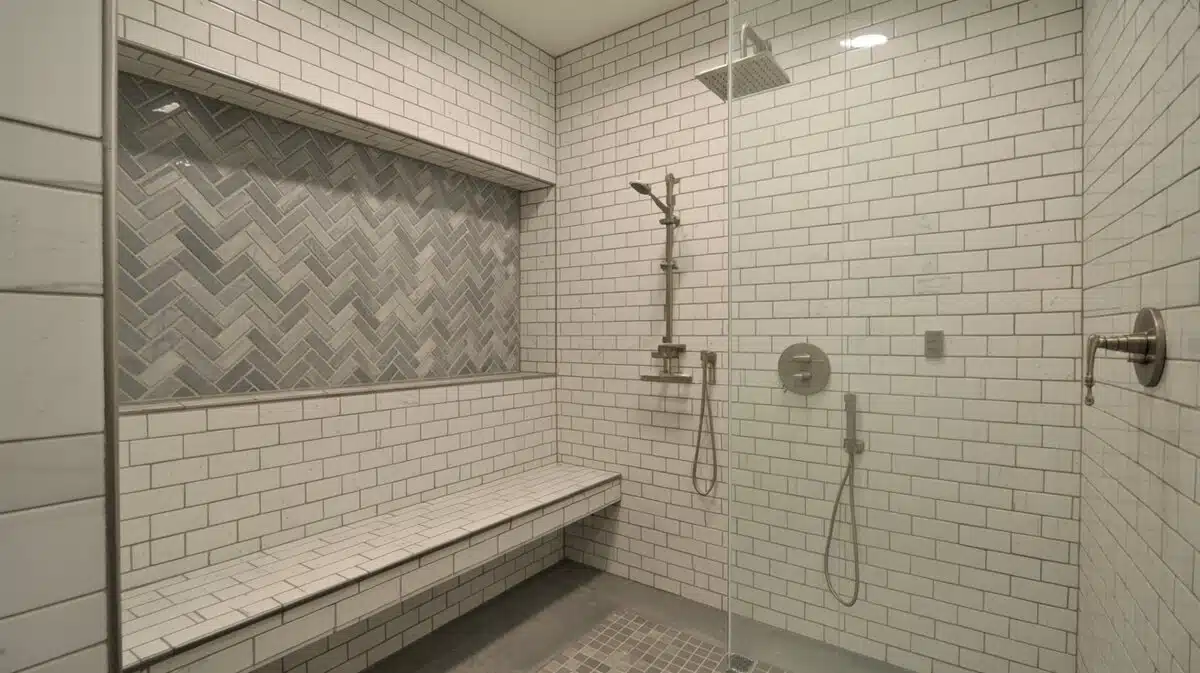
A built-in shower seat usually feels the most finished because the tile wraps over it as part of the room. It can run wall to wall, sit in a corner, or float from one side as a stone slab. In a larger primary bath, a full-width bench under a rain head can make the shower feel calm without adding visual clutter. In a small guest bath, a triangular corner seat may give enough support without stealing the standing zone.
The hidden issue is framing. A seat carries body weight, water, tile, and sometimes stone. The wall behind it needs blocking, and the base needs a waterproof plan that handles constant spray. This is not the place for guesswork. If the contractor treats the seat like a shelf, the room may look fine for a year and then show cracked grout, loose tile, or swelling where water found a path.
A built-in shower seat also changes the drain story. Water must shed off the top surface, away from corners and toward the floor drain. A flat bench is not a luxury detail. It is a slow leak waiting for patience. A small slope can feel invisible when you sit, but it saves the tile assembly from sitting under a thin film of water after every shower.
When a folding shower bench makes more sense
A folding shower bench belongs in rooms where floor space matters. Think of a 5-by-8-foot bathroom in a Cape Cod, a condo shower with a glass door swing, or a guest bath that must serve both an active teenager and a visiting grandparent. When folded up, the seat leaves more room for standing, cleaning, and moving around.
The tradeoff is feel. Some fold-down models feel steady and solid. Others flex, rattle, or make users hesitate. That hesitation matters. If someone does not trust the seat, they will not use it until they are already tired or unsteady. For safety, the bench needs real wall blocking, correct fasteners, and a rated seat that matches the user’s needs.
The official 2010 ADA Standards for Accessible Design are written for covered public and commercial settings, not as a private-home style guide. Still, many U.S. homeowners and remodelers use them as a reference point for seat height, clear space, grab bars, and reach. Treat them as a floor, not a finish line. Your own shower may need a solution that feels better than the minimum.
Look closely at the underside too. A fold-down model with open brackets may collect less grime than a bulky seat with hidden seams. In a rental unit or a busy family bathroom, that detail can matter more than the finish color. A seat that cleans fast gets used with less annoyance.
Shower Bench Installation Ideas for Safer Daily Use
This is where the project leaves the showroom and enters the wall. The prettiest seat still depends on structure, slope, waterproofing, and access to the controls. Good planning here may not be visible when the bathroom is done, but it decides whether the bench still feels solid five years later. The work should match the shower system, the wall framing, and the people using the space. It should also leave room for future needs, because knees, hips, and household routines change.
Build support into the wall before the surface goes on
Blocking is the quiet hero of a safe bench. Before cement board, foam board, or another approved backer goes up, the contractor should add wood or metal support where the seat and grab bars will attach. This step costs little during a remodel and costs far more after the tile is finished. It also gives you options later if you add a bar or swap a seat.
For a folding seat, blocking must line up with the mounting plate. For a floating bench, the support may involve steel brackets, engineered framing, or a manufacturer-approved system. For a masonry or framed bench, the base needs to become part of the waterproof assembly. Each approach has its own rules. Mixing parts because they look close enough is how good intentions turn into repair calls.
A non-obvious tip: add extra blocking even where you do not plan to install hardware yet. Future you may need a grab bar near the entry or a small assist handle beside the bench. A wall that already has backing gives you freedom. A finished hollow wall gives you limits.
Let water behavior guide the layout
Water is more patient than any homeowner. It finds flat ledges, dark grout lines, screw holes, and inside corners. A bench adds all of those risk points unless the shower uses the right waterproofing method. The seat top needs slope. The front edge needs a clean drip path. The wall-to-seat joint needs careful treatment. The floor needs a drain plan that does not leave standing water under the user’s feet.
Large-format tile can help because it cuts down on grout lines, but it is not magic. A poorly sloped slab still holds water. Pebble floors may look gentle, yet some users find them harder to balance on because the surface has more texture variation. Smooth porcelain with a wet-rated finish may be the better answer for many homes, especially when paired with bathroom flooring choices for wet areas that favor grip over shine.
The best curbless shower layout often pairs well with a bench because it removes the step at the entry. The catch is floor height. In many American homes, especially on wood-framed second floors, the contractor must plan the recess, slope, and drain before ordering tile. A curbless shower layout added late can create awkward ramps, poor drainage, or a door that no longer clears the bath mat.
Door choice also affects drainage. A frameless door with a low sweep can drag across a raised transition or send water toward the bath floor if the slope is wrong. A curtain may look less fancy, but it can make a narrow bath easier for a caregiver because it opens the full width of the shower. That choice deserves respect.
Make the Bench Feel Designed, Not Added Later
After structure and water control, the seat still has to belong in the room. This is where many projects either soften into a calm bathroom or drift into medical-office territory. Comfort and safety do not need to look cold. The bench can match the tile, contrast with it, warm up the room with wood tones, or become a quiet stone ledge. The trick is to make each design choice earn its keep.
Pair materials with cleaning habits
Tile benches look tidy when the grout lines align with the shower walls. Stone benches feel solid and upscale, especially as a single slab. Teak adds warmth and can suit a shower with simple tile and black or brass fixtures. None of these choices is always right. The best material is the one your household will maintain.
A marble slab may look beautiful in a Nashville primary bath, but it can stain or etch if the owner uses harsh cleaners. Small mosaic tile can curve over a seat nicely, yet the grout demands more scrubbing. Teak needs air circulation and care. Porcelain slabs or larger porcelain tile often give homeowners the clean look they want with fewer maintenance headaches.
The non-obvious move is to think about shampoo, shaving cream, hair dye, and hard water before choosing the finish. A bench is not a dry display shelf. It catches products, elbows, razors, and mineral spots. In parts of Arizona, Nevada, and Texas where hard water is common, a dark seat may show pale spotting faster than a mid-tone surface. Beauty should survive Tuesday morning.
Use contrast, light, and storage to support accessibility
A bench can disappear too well. Designers often love tone-on-tone rooms, but some users need edges they can read at a glance. A slight contrast between the seat and wall helps define where to sit. Better lighting near the shower entry helps too, especially for older eyes or anyone showering early before work.
Accessible bathroom design also improves when storage sits near the seated position. A niche that looks centered on the back wall may be useless from the bench. A low niche can flood with water. A narrow ledge near the controls may work better for soap and shampoo, as long as it does not become a clutter shelf. For deeper planning, connect the seat choice with walk-in shower remodel planning so glass, tile, drain, and storage do not fight each other.
This is also where the handheld shower becomes part of the bench plan, not an upgrade tacked on at the end. Put the slide bar or bracket where a seated user can reach it without standing. Keep the hose long enough to rinse the bench and floor. A seat without a usable sprayer is half a solution.
Controls deserve the same restraint. One valve, one diverter, and a handheld sprayer often serve a seated user better than a wall full of body sprays. Extra fixtures can create more cleaning, more water direction problems, and more decisions when someone wants a simple wash. Calm design often comes from removing choices.
Conclusion
A shower bench works best when it feels like part of daily life rather than a warning sign about getting older. The right seat can help you slow down, wash with less strain, recover after an injury, or make the bathroom friendlier for guests. It can also make a new shower feel calmer and more complete.
Still, the project should never begin with the prettiest photo. Shower Bench Installation earns its value through placement, support, drainage, and reach. Style matters, but water and body movement matter more. When those parts line up, the bench looks better because it works better.
For most U.S. homeowners, the smartest path is simple: plan the user’s movement, pick the seat type that fits the room, build support into the walls, and choose finishes you can keep clean. Do that, and the bench will not feel like an add-on. It will feel like the reason the shower finally makes sense.
Frequently Asked Questions
How much does it cost to add a shower bench?
Costs vary by bench type, tile work, wall condition, and local labor rates. A freestanding bench costs the least. A fold-down model costs more because it needs blocking and proper mounting. A tiled seat often costs the most since it affects framing, waterproofing, and finish work.
Is a built-in seat better than a fold-down seat?
A permanent tiled seat feels more custom and can add a strong design feature. A fold-down seat saves space and works well in smaller showers. The better choice depends on room size, user needs, cleaning habits, and whether the walls are open for added support.
What is the best height for a shower seat?
Many seats fall around normal chair height, but the right height depends on the user’s legs, balance, and transfer needs. Public accessibility standards often guide remodelers, yet private homes should be fitted to the person using the shower most often.
Can I add a bench to an existing tiled shower?
Yes, but the options may be limited. A freestanding bench is the simplest. A wall-mounted seat needs secure backing behind the tile, which may not exist. Some projects require opening the wall to add support and protect the waterproof layer.
Does a shower bench need to slope?
Yes, any built-in or tiled seat should slope slightly toward the shower floor so water drains off. A flat seat can hold puddles, stain grout, and raise the risk of moisture trouble. The slope should feel subtle when sitting.
What material is easiest to clean on a shower bench?
Porcelain tile or porcelain slab is often easier to live with because it resists staining and does not need the same care as natural stone. Fewer grout lines also help. The best surface has grip, sheds water, and handles normal bathroom cleaners.
Should grab bars be installed with the bench?
Yes, grab bars often make the bench safer and easier to use. They should be placed where the user can sit, stand, and steady themselves without reaching too far. Add wall blocking during the remodel even if you install the bars later.
Can a shower bench make a small bathroom feel crowded?
It can, especially if the seat sits in the main standing path. A corner seat, floating slab, or fold-down model may keep the room open. Glass placement, drain location, and storage also affect how roomy the shower feels after the bench goes in.