

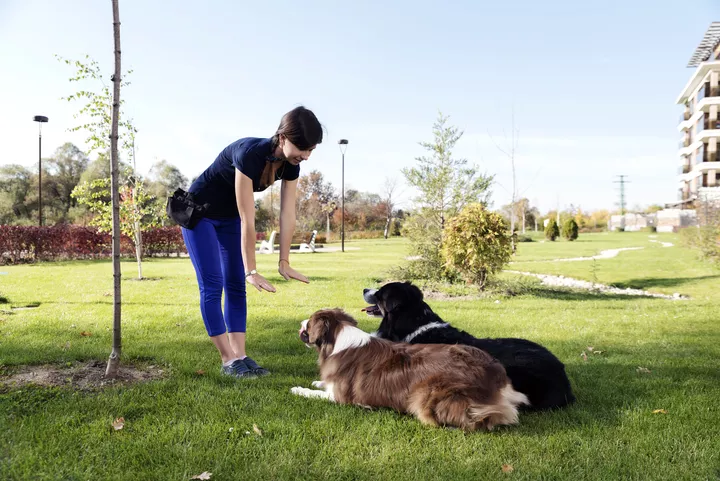
A canine behavior specialist looks beyond unwanted behaviors to understand what a dog is communicating through its actions. Barking, lunging, jumping, hiding, or refusing to respond may have different causes, and treating every behavior the same can lead to frustration for both dogs and owners.
Effective behavior work starts with identifying patterns, understanding triggers, and teaching practical responses. When owners learn why a dog behaves a certain way, training becomes more purposeful and easier to maintain. With guidance from Rob’s Dog Training, owners can develop practical strategies for addressing challenging behaviors and building more reliable responses.
What Does a Canine Behavior Specialist Do?
A canine behavior specialist focuses on the reasons behind a dog’s behavior rather than simply trying to stop the visible problem.
For example, a dog that growls when another dog approaches may not simply be “aggressive.” The behavior could be connected to fear, frustration, previous experiences, territorial responses, or a lack of appropriate social skills.
A professional approach considers the dog’s environment, history, body language, triggers, and responses before determining how training should proceed.
Common behavior concerns may include:
- Excessive barking
- Leash pulling or lunging
- Fearful behavior
- Reactivity toward dogs or people
- Jumping on visitors
- Separation-related behaviors
- Resource guarding
- Poor impulse control
- Difficulty settling
- Recall problems
- Unwanted chasing
The objective is not to label the dog. It is to understand the behavior well enough to create a practical training plan.
Why Understanding Dog Behavior Matters
Dogs communicate constantly through posture, movement, facial expressions, vocalizations, and changes in behavior. Owners who recognize these signals can often respond before a situation escalates.
Consider a dog that becomes uncomfortable around unfamiliar visitors. The first visible sign might be barking, but earlier signals could include turning away, avoiding eye contact, stiffening, licking the lips, or moving behind the owner.
Recognizing those signs gives the handler an opportunity to create distance and redirect the dog before the behavior becomes more intense.
This is one reason behavior modification should not focus solely on the final reaction. The moments leading up to the reaction often provide valuable information about what the dog is experiencing.
Canine Behavior Specialist vs. Basic Obedience Training
Obedience training and behavior-focused training can overlap, but they are not identical.
Basic obedience teaches skills such as sit, down, stay, heel, place, and recall. These behaviors can provide structure and improve communication between dogs and their handlers.
A canine behavior specialist, however, may need to address situations in which a dog already knows commands but struggles to respond because of fear, excitement, frustration, environmental distractions, or strong emotional reactions.
For example, a dog may perform a perfect sit in a quiet room but ignore the same cue when another dog passes on a walk.
That does not necessarily mean the dog has forgotten the command. The environment may simply be more challenging than the dog’s current level of training.
5 Practical Steps for Addressing Behavior Problems
Behavior improvement rarely comes from repeating a command louder or correcting the same response again and again. A more thoughtful process starts by identifying what happens before, during, and after the behavior.
1. Identify the Trigger
Start by determining what consistently precedes the unwanted behavior.
Is it another dog? A stranger? A particular sound? Being left alone? A specific location?
Keeping brief notes can reveal patterns that are difficult to notice during individual incidents.
2. Watch for Early Warning Signs
Learn the dog’s body language before the reaction becomes intense.
Changes in posture, facial expression, movement, vocalization, or attention can indicate increasing stress or excitement. Recognizing these signals allows handlers to intervene earlier.
3. Manage the Environment
Training is more productive when the dog is not repeatedly pushed beyond its ability to cope.
Management may involve increasing distance from triggers, choosing quieter walking routes, using barriers at home, or limiting situations that consistently cause overwhelming reactions.
Management is not a substitute for training. It creates conditions in which learning can take place.
4. Teach an Alternative Response
Simply telling a dog what not to do leaves an important question unanswered: what should the dog do instead?
An alternative behavior might involve checking in with the handler, moving to a designated place, walking calmly beside the owner, or responding to a reliable recall cue.
The replacement behavior should be practical enough to use in real-life situations.
5. Practice Gradually
A dog that reacts strongly to a trigger may struggle if exposed to it at full intensity immediately.
Instead, training can begin at a manageable level and gradually become more challenging as the dog demonstrates reliable responses.
Progress should be measured by the dog’s ability to remain responsive and composed, not simply by how close the trigger can get.
The Role of Impulse Control in Dog Behavior
Impulse control is an important part of many behavior training programs.
Dogs naturally respond to things that are exciting, interesting, frightening, or rewarding. A squirrel running across a path, a visitor entering the house, or another dog approaching can compete strongly with the handler’s instructions.
Teaching a dog to pause, focus, wait, and respond before acting can improve everyday reliability.
Useful exercises include:
- Waiting before going through doors
- Holding a position around distractions
- Looking toward the handler when prompted
- Waiting for permission to access food or toys
- Practicing calm greetings
- Building reliable recall around controlled distractions
These exercises are most useful when introduced gradually and practiced consistently.
Why Consistency Matters in Behavior Training
Dogs learn from repeated experiences. If a behavior is acceptable in one situation but discouraged in another, the dog may struggle to understand what the handler expects.
Consistency does not mean every training session needs to be identical. It means the communication and expectations remain clear.
Everyone interacting regularly with the dog should understand the basic rules and cues being used. Consistent reinforcement helps prevent confusion and makes new skills easier to apply across different environments.
When Professional Dog Training May Be Appropriate
Some behavior concerns are difficult to address without professional guidance, particularly when the behavior is intense, unpredictable, or potentially dangerous.
A professional trainer can observe the dog’s behavior in context, identify possible triggers, and help the owner establish realistic training steps.
Professional support can be especially useful when a dog:
- Regularly lunges or snaps
- Shows intense fear around people or dogs
- Cannot settle in everyday environments
- Repeatedly escapes or ignores recall
- Displays resource guarding
- Has behavior that is becoming more frequent
- Poses a safety concern for people or animals
Behavior changes can also have medical causes. A sudden or significant change in behavior should be discussed with a veterinarian to rule out pain, illness, or other underlying concerns.
Building Reliable Behavior Beyond the Training Session
One of the biggest mistakes owners can make is treating training as something that happens only during scheduled sessions.
Dogs need opportunities to practice skills in everyday life.
A reliable recall, for instance, should eventually be practiced in different safe environments and around carefully managed distractions. Likewise, loose-leash walking should not remain limited to a quiet driveway if the goal is calm neighborhood walks.
Training should gradually move from controlled exercises toward realistic situations while maintaining an appropriate level of difficulty.
This approach helps dogs understand that their skills apply beyond one room, one trainer, or one specific training session.
Choose Training That Addresses the Whole Dog
Successful behavior training is rarely about finding one command that instantly solves a difficult problem. It requires observation, patience, appropriate management, clear communication, and consistent practice.
Working with a canine behavior specialist can give owners a clearer understanding of what drives a dog’s behavior and which training strategies are appropriate for the situation.
For owners looking for professional guidance with obedience, behavior challenges, or practical dog training, Rob’s Dog Training provides training support designed around real-world canine behavior and reliable communication.
Visit Rob’s Dog Training to learn more about professional dog training services and find an approach suited to your dog’s needs.